
Product and modules
We clarify the problem and its users, then define the first release and how product modules relate.
- Product scope
- Module structure
We build tailored SaaS platforms that bring customer relationships, teamwork and your business processes together.
Let’s build your platformOpen a card and make it yours. Move the conversation forward.
SaaS and Platform Development
We design SaaS products as platforms where customer accounts, permissions, product rules and operations work together, alongside the application users access.
Whether we are building a new product or developing an existing platform, we look beyond today’s scope and create a structure where new customers, features and business models can be added in a controlled way.
What we deliver
We clarify the problem and its users, then define the first release and how product modules relate.
We define how customers, teams and roles use the application, with data access and customer separation built into the architecture.
We plan from the outset how the platform will connect to existing systems and expand to meet new needs. APIs, service connections and extension points for new modules are built into the product architecture from the beginning.
The work in context
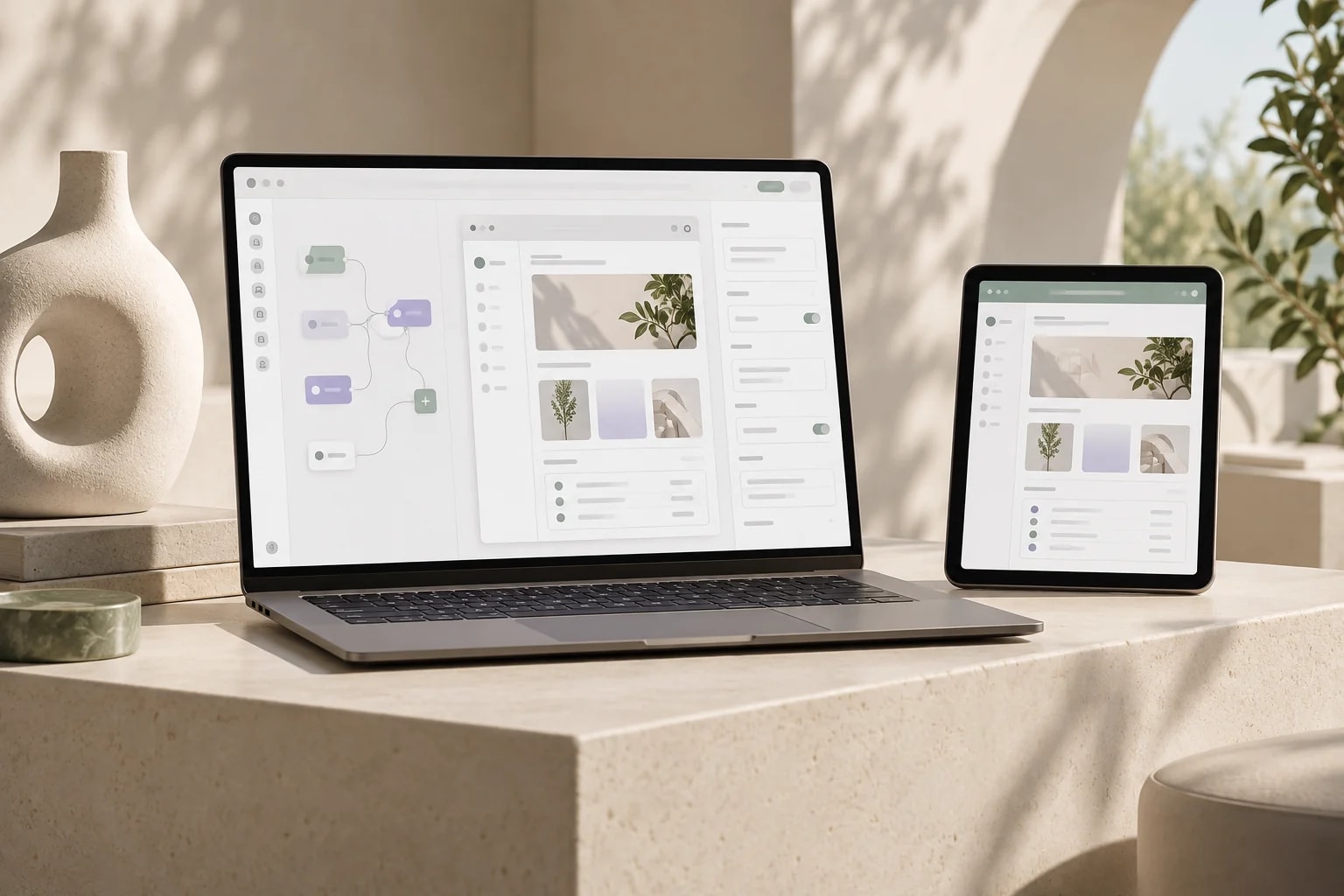
How a SaaS platform is managed matters as much as the customer experience. We design administration screens to make it easier to track customer activity, change product settings and respond quickly to operational needs.
As the product grows, the management workload does not increase; teams can maintain the control they need directly through the platform.
How we work together
Deliverables and the working plan are defined around the needs of your project.
We clarify the target user, the product’s core value and the functions needed in the first release. The business model is also considered as part of product decisions.
We design modules, customer accounts, roles, data structures and service connections together. This establishes the foundation for adding new features and customers.
We develop priority flows as working increments and validate the first release by testing user roles, business rules and critical scenarios.
We plan administration tools, monitoring needs and priorities for subsequent releases. We establish a development process that allows usage data and new needs to inform the product in a controlled way.
Engineering in the details
We keep each customer’s data and access boundaries independent in a secure structure.
We plan new features, data changes and API updates without disrupting existing customers’ use.
We make errors, performance and system usage visible so the platform’s health can be tracked.
Common questions
We prioritize the flows that deliver the product’s core value to users in the first release. Modules, integrations and administration needs are arranged around this core, separating the initial release from subsequent development steps.
Yes. We can design customer-specific permissions, features, settings and usage rules without disrupting the shared product structure. This creates a platform with controlled customization, rather than a separate product for every customer.
Data separation is defined at the start of the platform architecture. We establish clear boundaries around the data and actions each customer can access, and plan the required security and isolation levels around the product’s structure.
Yes. We first assess the existing product’s architecture, user structure and operating model. Instead of a complete rewrite, we can plan a phased transition through modules, account structures and the administration layer where appropriate.
Yes. SSO, role-based access, team structures and organization-specific permission models can be included in the platform scope. We design identity and access as part of the product’s security model, beyond the sign-in screen.
Yes. Plans, usage limits, feature access and payment flows can be designed around the product model. We do not treat subscriptions as a requirement for SaaS; other models, such as licensing or enterprise contracts, can also be supported.
We evaluate expected user and data volumes, critical operations and external service dependencies alongside architectural decisions. Monitoring, error tracking and capacity needs are planned to expand as the product grows.
Yes. APIs and connections to CRM, ERP, identity services and internal systems can be designed as part of the platform architecture. The aim is to keep the new platform connected to your existing technology environment.
Share your target customer, the job you want to solve and any existing product.